Here is what Bill Nye has to say about the Millennium Development Goals.
Showing posts with label Global Health. Show all posts
Showing posts with label Global Health. Show all posts
Sunday, January 26, 2014


An Update on the Millennium Development Goals
Over the last month, many of us have set out to make a change in our lives. Drink more water, exercise X-days per week, read more books, drink less soda, do more good deeds, etcetera, etcetera, etcetera. Some succeeded in achieving their goals for 2013 and went into 2014 with more power and motivation. Others faltered halfway through the year, yet are feeling re-energized and hopeful for 2014. And alas, there are others who abandoned all efforts by this time last year and didn't even bother to set a goal for the new year. My goal was to restart this blog--for real. So while we are stranded at home during this arctic blast/polar vortex/frozen world, here are some people who are fighting relentlessly to carry their achievements through 2014, in a fierce attempt to achieve a set of goals many would consider entirely unattainable.
What are the Millennium Development Goals?
In 2000 the UN General Assembly resolved to lessen poverty and starvation, increase gender equality, and save the environment. Sounds pretty lofty, no? They developed a strategic plan and a deadline. The deadline is the year 2015. With one year to go, here’s an update on the progress of each goal. The green text indicates the goal has been achieved; blue indicates that they are on track or that significant progress has been made, and a concerted effort should result in attaining the goal; red indicates progress has been made and with a concerted effort there remains a possibility of achievement; and brown indicates that despite the progress it is unlikely the goal will be met.
 1. Reduce extreme poverty by half and reduce hunger by half
a. Achieved 5 years ahead of schedule! In developing regions, the proportion of people living on less than $1.25 a day fell from 47% in 1990 to 22% in 2010.
b. The proportion of undernourished people in developing regions decreased from 23.2 per cent in 1990–1992 to 14.9 per cent in 2010–2012. Given reinvigorated efforts, the target of halving the percentage of people suffering from hunger by 2015 appears to be within reach.

2. Achieve universal primary education
a. Between 2000 and 2011, the number of children out of school declined by almost half—from 102 million to 57 million.

3. Promote gender equality and empower women through primary education, paid employment, and representation in national parliaments.
a. Whether in the public or private sphere, from the highest levels of government decision-making to households, women continue to be denied equal opportunity with men to participate in decisions that affect their lives.

4. Reduce mortality of children under 5 by two-thirds and increase measles immunizations
a. Worldwide, the mortality rate for children under five dropped by 41 per cent—from 87 deaths per 1,000 live births in 1990 to 51 in 2011. Despite this enormous accomplishment, more rapid progress is needed to meet the 2015 target of a two-thirds reduction in child deaths. Increasingly, child deaths are concentrated in the poorest regions, and in the first month of life.
b. Since 2000, measles vaccines have averted over 10 million deaths.
b. Since 2000, measles vaccines have averted over 10 million deaths.

5. Reduce maternal mortality by three-fourths
a. Globally, the maternal mortality ratio declined by 47% over the past two decades, from 400 maternal deaths per 100,000 live births in 1990 to 210 in 2010.

6. Halt and reverse spread of HIV/AIDS, halt and reverse spread of malaria, halt and reverse spread of tuberculosis.
a. Worldwide, the number of people newly infected with HIV continues to fall, dropping 21% from 2001 to 2011. With continued efforts, close to 15 million people may be receiving antiretroviral therapy by the end of 2015.
b. Between 2000 and 2010, mortality rates from malaria fell by more than 25% globally, with 1.1 million deaths averted.
c. TB prevalence rates and associated deaths are falling in most regions, and
successful treatment is exceeding global targets.
c. TB prevalence rates and associated deaths are falling in most regions, and
successful treatment is exceeding global targets.
 7. Reverse loss of forests, halve proportion without improved drinking water, halve proportion without sanitation, and improve the lives of slum-dwellers.
a. The growth in global emissions of carbon dioxide (CO2) is accelerating, and emissions today are more than 46 per cent higher than their 1990 level. Forests continue to be lost at an alarming rate. Overexploitation of marine fish stocks is resulting in diminished yields. More of the earth’s land and marine areas are under protection, but birds, mammals and other species are heading for extinction at an ever faster rate, with declines in both populations and distribution.
b. Achieved 5 years ahead of schedule, despite population growth! Over 2 billion
people gained access to improved sources of drinking water.
c. From 1990 to 2011, 1.9 billion people gained access to a latrine, flush toilet or other
improved sanitation facility.
d. Between 2000 and 2010, over 200 million slum dwellers benefitted from improved
water sources, sanitation facilities, durable housing or sufficient living space, thereby
exceeding the 100 million MDG target. Many countries across all regions have shown
remarkable progress in reducing the proportion of urban slum dwellers.
b. Achieved 5 years ahead of schedule, despite population growth! Over 2 billion
people gained access to improved sources of drinking water.
c. From 1990 to 2011, 1.9 billion people gained access to a latrine, flush toilet or other
improved sanitation facility.
d. Between 2000 and 2010, over 200 million slum dwellers benefitted from improved
water sources, sanitation facilities, durable housing or sufficient living space, thereby
exceeding the 100 million MDG target. Many countries across all regions have shown
remarkable progress in reducing the proportion of urban slum dwellers.

8. Establishing a global partnership for development through financial aid, debt relief, expanding trade, providing employment for youth, and providing access to disease-fighting drugs.
a. In 2012, net aid disbursements from developed to developing countries totalled $126 billion. This represents a 4% drop in real terms compared to 2011, which itself was 2 per cent below 2010 levels. This decline affected least developed countries disproportionately. In 2012, bilateral official development assistance to these countries fell by 13 per cent, to
about $26 billion.
b. The debt service to export revenue ratio of all developing countries stood at 3.1% in
2011, down from nearly 12 per cent in 2000. Their duty-free market access also improved in
2011, reaching 80 per cent of their exports. The exports of least developed countries
benefitted the most. Average tariffs are also at an all-time low.
about $26 billion.
b. The debt service to export revenue ratio of all developing countries stood at 3.1% in
2011, down from nearly 12 per cent in 2000. Their duty-free market access also improved in
2011, reaching 80 per cent of their exports. The exports of least developed countries
benefitted the most. Average tariffs are also at an all-time low.
Thank you for reading,
AKB
Friday, June 24, 2011
Hello bloggers! Yes, it is me again, if any of you [readers] are still out there!
I am still alive, and have not completely forgotten about this blog.
First, I would like to make a public statement that I am going to attempt to pick this blog back up.
Second, I read an interesting article this morning that I would like to share. Although, it is probably old news on here, as I have been out of touch for so long.
This article presents an efficient way to purify contaminated water in the developing world.
I hope to follow-up with some science-based articles soon...
First, I would like to make a public statement that I am going to attempt to pick this blog back up.
Second, I read an interesting article this morning that I would like to share. Although, it is probably old news on here, as I have been out of touch for so long.
This article presents an efficient way to purify contaminated water in the developing world.
I hope to follow-up with some science-based articles soon...
Monday, March 22, 2010
My favorite part of summer is sitting by the poolside with a cold glass of pink lemonade
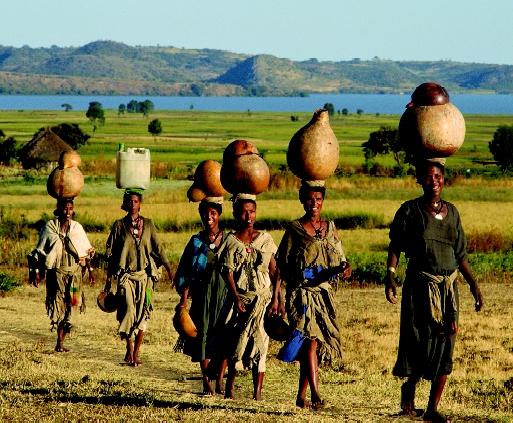
5:30pm, time to take another pool count, before the next birthday swim party comes in. On Saturday I worked at my local recreation center, where I am an aquatic supervisor and instruct learn-to-swim classes. As I watched the 67 people stand in line patiently for the water slide, relax in the lazy river, dive (ahhh—no diving!) and jump in from the side, or sit peacefully in the spa/whirlpool, I began to think about the frivolous uses we find for clean water here in the Developed world (primarily the US), in comparison to the dire need for clean water in the rest of the Globe. This pool, which is only one of the 14 public pools (that I can think of) within a 5mile radius of my home, can probably hold approximately 150 “bathers” comfortably at one time… not to mention the fact that we are only talking about the indoor pool here, there is also an outdoor pool open during the summer season!… can you imagine what a Malagasy or Ethiopian village could do with all of that water??? Although I don’t as often as I should, every day I must remind myself how blessed I am to live in this Country.
15 – the time, in minutes, I use to take a shower each day
4 – average number of times I flush the toilet every day
3.5 – the average amount of water, in gallons, used every time someone flushes a Standard American toilet
150,000 – the approximate number of gallons held in the pool where I teach swim lessons twice a week
4 – due to our standard filtration system in the indoor pool, the entire volume of water is “changed out” or filtered out in an estimated period of four hours (yeah, that’s an average of 900,000 gallons each day)

884 – the number of people, in millions, who lack access to safe water
15 – according to the UN Human Development Report, an estimated every 15 seconds a child dies from a water related disease
8 – the average economic return in US dollars, for every US dollar invested in bringing clean water and sanitation to the underdeveloped world
For more information on World Water Day/Week and the global impact of water and sanitation: WHO, Water.org, CDC
Photo Credits: image 1 is not of my pool, though I so wish it was. image 2 acquired from water encyclopediaMonday, February 8, 2010
more on Google trends
The Spanish National Epidemiology Center conducted a study Jan 2004—Feb 2009, evaluating the use of internet databases, such as Google insights, for tracking emerging infectious diseases. They compared the Google queries regarding Influenza-like-illnesses to reported cases. Their results suggest that internet databases and tools such as HealthMap (my new favorite website!) can be used as early warning signals for an outbreak in addition to standard surveillance systems.
Although published on the US CDC website, these results should not be taken too heavily by the general public, as is often done. I would imagine the results would be strongly biased based on a number of factors.
Wednesday, January 20, 2010
No, the Government's not entirely crazy...................
This morning an editorial was released by the Indian Journal of Medical Microbiology, regarding the outcome of the H1N1 outbreak in the East, from the standpoint of public health management. This article reminded me of a conversation I recently had with a gentleman regarding H1N1 and the “unnecessary overreaction of the WHO and the CDC.”
In India alone there were 16820 reported cases testing positive for H1N1 and 555 deaths. And as a reminder, the global death toll resulting from this pandemic was estimated to be 8800 in mid-December 2009.
Through the panic and confusion, laboratories and public health officials worldwide scrambled to maintain the outbreak, utilizing systems established as a direct result of the SARS outbreak in 2002-03. This time around, challenges primarily arose from internal, rather than global, communication. Lessons learned from this pandemic have stimulated governments, such as in India, to strengthen their outbreak management strategies.
Lessons Learned/Reminder:
- Efficient communication results in greater public resilience and rapid containment, thus limiting morbidity and mortality
- Lessons learned from one outbreak may not always apply to the next, and so laboratories need to be prepared to adapt and respond to new scenarios in short periods of time
- Increased awareness of systems development and lateral communication among clinical microbiologists is needed
“Every time the dust settles after an epidemic or an outbreak, there is complacency at various levels in the system. With the establishment of nodal agencies, departments, international collaboration and multiple resources, it is hoped that healthcare set ups are prepared adequately for rapid response in outbreak management.”Saturday, November 28, 2009
An update on H1N1
According to this week’s HealthMap Blog Somalia reported its first cases of H1N1, raising the pandemic into 86 different nations. Furthermore, HealthMap reported on the emergence of Tamiflu-resistant strains among hospitalized patients in Wales. The BBC News reported, last Friday 20 November, that while the strain does not appear to cause more severe illness in patients than the common H1N1, and while this was expected by virologists and public health officials, its rise and even more so person-to-person transmission is of serious concern to public health. Additionally, similar cases were reported last Friday at the Duke University Hospital in North Carolina. Little more information was found regarding these cases; however, reports have stated that much ongoing research is investigating the detriment caused by this strain.
In addition to the rise of the tamiflu-resistant strain, HealthMap also noted the most recent detection, by Norwegian scientists, of a mutated viral strain potentially causing infection deeper into the airways leading to more severe disease. However, the same mutated strain was also observed in Finland, where at least 14 lives have been claimed out of the Nation’s near 5,900 reported cases, yet the strain was not found to cause more severe illness. According to the WHO, this same mutation has been observed in China, Japan, Mexico, Ukraine, and the United States without appearing to give rise to increased virulence.
As the “swine flu” or, to be politically correct, H1N1 continues to wage war against the strength of the human immune system, supplemented with anti-viral drugs, and the management of public health; we should not succumb to public fears. Despite the approximate 525,000 reported cases, the near 7,000 deaths caused by H1N1, and the eastward spread of the virus, its activity has significantly decreased in the United States, where cases run the highest.
Subscribe to:
Posts (Atom)